New research from the WM-Net Zero project explores how local climate policies can create wider social benefits when designed through a joined-up systems approach.
The study, co-developed with local and regional authority officers across the West Midlands, examined how issues such as poverty, housing, transport, employment, health and climate resilience interact with efforts to achieve net zero.
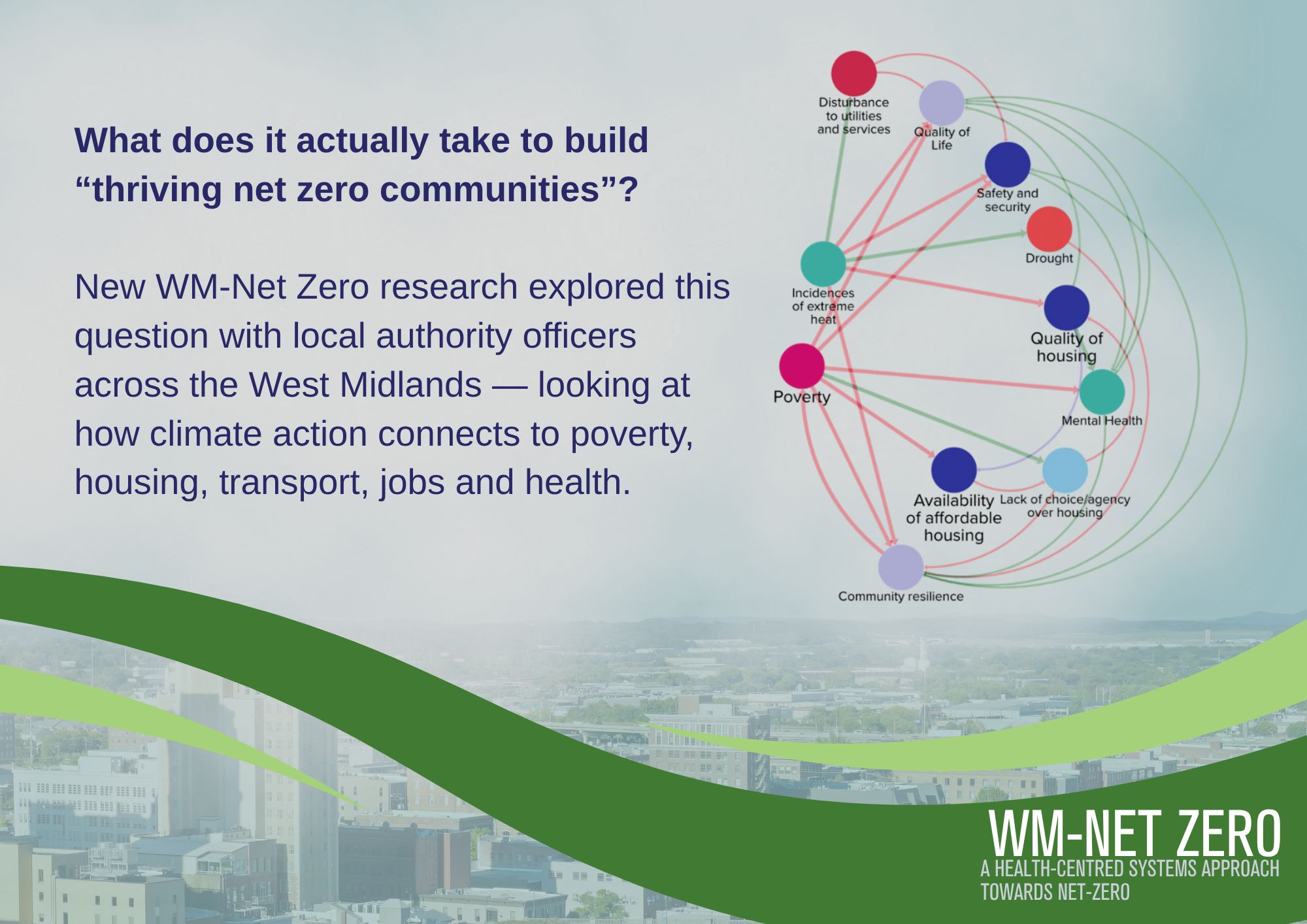
Using participatory systems mapping workshops, officers from different policy areas worked together to map the challenges and opportunities involved in creating what participants described as “thriving net zero communities”.
One of the strongest findings from the work was the central role of poverty within the wider system. Participants identified poverty as influencing many key local outcomes, including population health, quality of life, resilience and access to opportunity. The research highlights that climate action cannot be separated from wider social and economic realities.
The study also explored how net zero policies could generate multiple co-benefits when designed collaboratively across sectors. Examples identified through the mapping process included:
- Housing retrofit programmes improving health and reducing fuel poverty
- Public transport investment supporting access to employment and education
- Skills and training programmes helping communities benefit from green investment
The work further demonstrated how participatory systems mapping can help local authorities move beyond policy silos by creating space for collaboration between transport, housing, planning, environmental health and climate teams.
The research forms part of WM-Net Zero’s broader work on developing health-centred approaches to climate mitigation policy in the West Midlands.
Read the full paper:
https://doi.org/10.3390/systems14050518